

Why Automotive Networks Need Fault Insertion
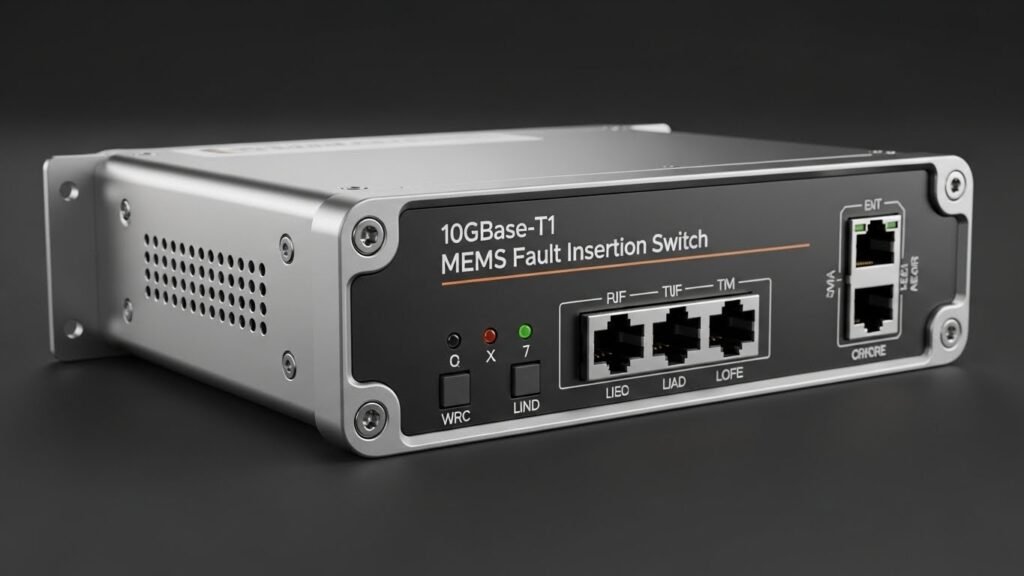
Modern vehicles rely heavily on high-speed in-vehicle networks like 10GBase-T1 for ADAS, infotainment, and autonomous systems. Testing these networks under fault conditions is critical for safety and reliability. The 10GBase-T1 MEMS Fault Insertion Switch enables engineers to simulate network faults accurately, ensuring robust automotive Ethernet validation.
High-Speed Performance in a Compact Form Factor
The switch supports full 10GBase-T1 speeds while maintaining low insertion loss and high isolation. Its MEMS-based design offers microsecond-level switching for realistic fault scenarios, making it ideal for production testing, validation labs, and R&D environments where performance and precision are paramount.
Flexible Network Simulation
With the 10GBase-T1 MEMS Fault Insertion Switch, engineers can simulate short circuits, open circuits, and impedance mismatches across multiple channels. This flexibility allows comprehensive testing of complex automotive networks, helping identify potential failure points before vehicles reach production.
Scalable and Easy to Integrate
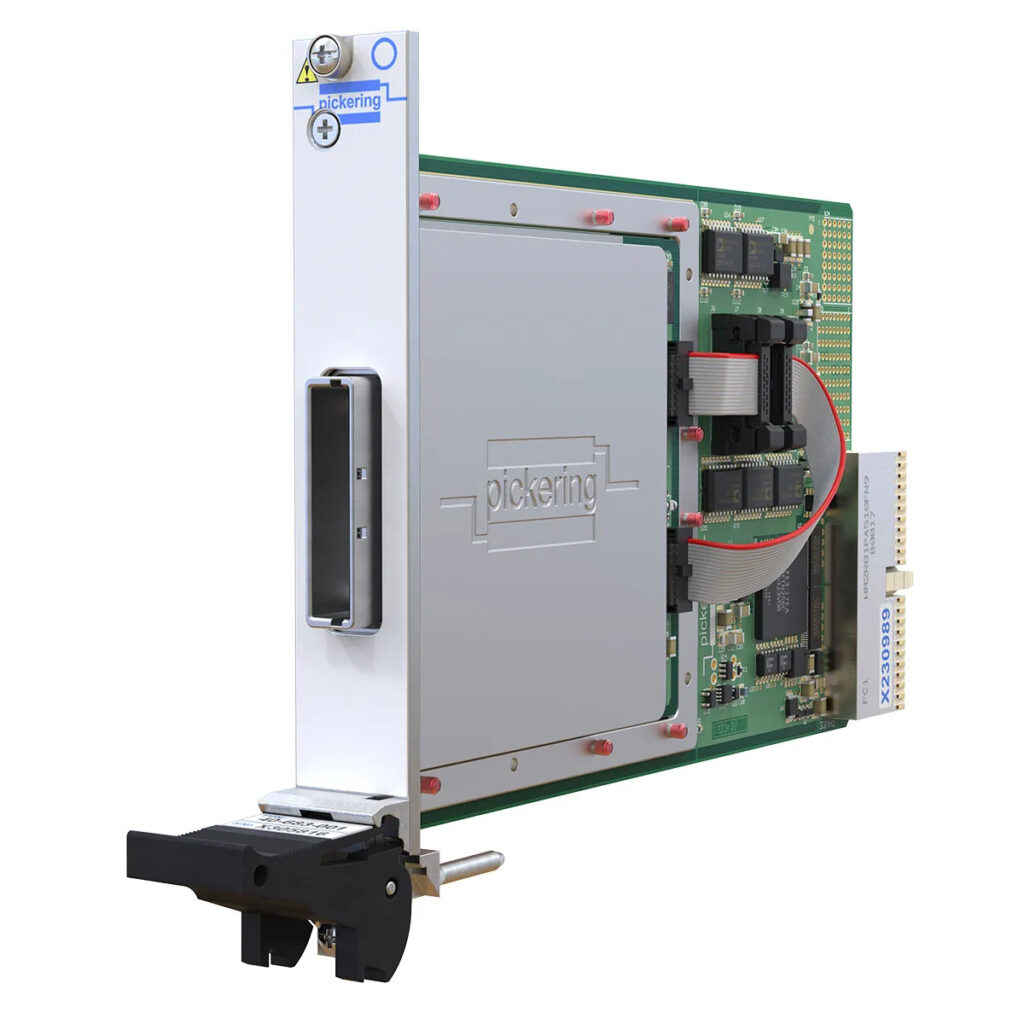
Multiple switches can be combined for larger test setups, providing scalable fault insertion capability for high-channel-count systems. Standard interfaces ensure seamless integration into existing test racks, PXI or LXI systems, and automated test workflows.
Software Control and Automation
The switch is compatible with standard test software platforms, enabling scripted fault scenarios, automated test sequences, and remote operation. This reduces manual intervention, improves repeatability, and accelerates test cycles for high-volume production.
Key Benefits of the 10GBase-T1 MEMS Fault Insertion Switch:
- Accurate simulation of network faults for validation and safety testing.
- Microsecond-level MEMS switching for realistic network behavior.
- Scalable for multi-channel, high-density test setups.
- Easy integration with PXI, LXI, and automated test environments.
- Software-controlled operation for automation and repeatable results.
FAQ Section
Q1: What is a 10GBase-T1 MEMS Fault Insertion Switch used for?
A1: A 10GBase-T1 MEMS Fault Insertion Switch is used to simulate faults in high-speed automotive Ethernet networks. It allows engineers to test short circuits, opens, and impedance mismatches under controlled conditions for validation and production testing.
Q2: How fast can the MEMS switch operate?
A2: MEMS-based switching provides microsecond-level response, enabling realistic fault simulations without affecting normal network traffic.
Q3: Can this switch be integrated into existing test systems?
A3: Yes, it supports standard PXI, LXI, and automated test system interfaces for seamless integration into current workflows.
Q4: Is the switch suitable for high-volume production testing?
A4: Absolutely. Its automated control, fast switching, and scalable architecture make it ideal for production-line Ethernet testing.
Recent Comments